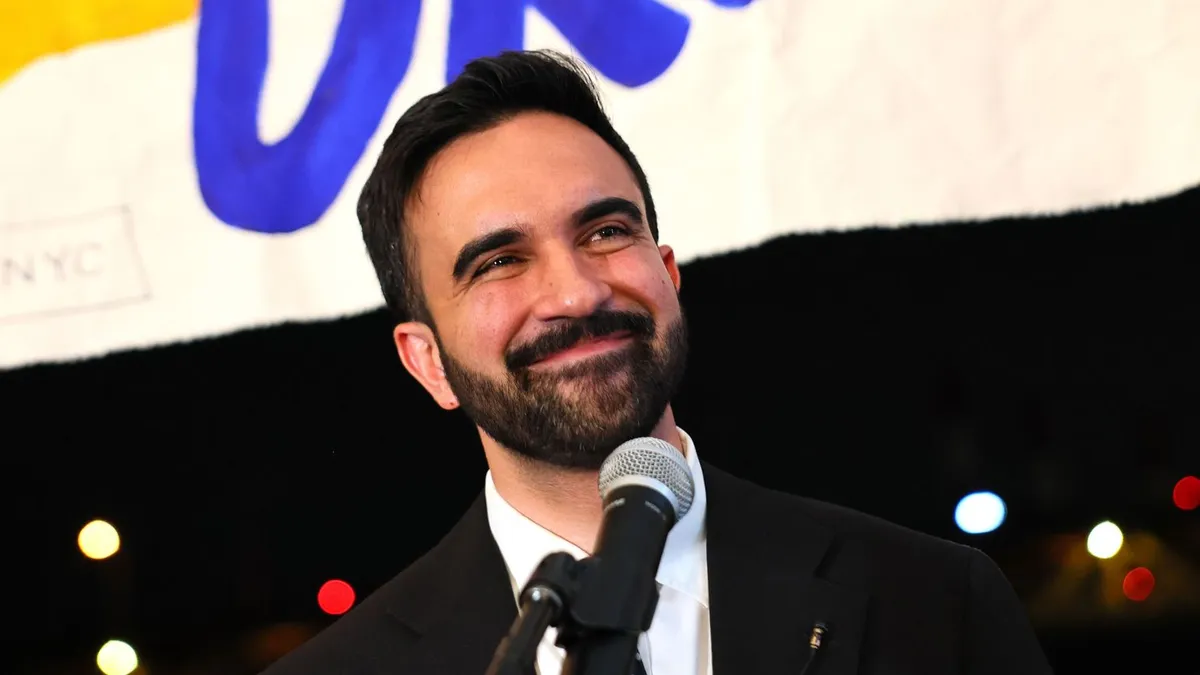
Mamdani Didn’t Win NYC With a Test Score
The major every Muslim parent fears just produced the victory every parent wants.
I don’t normally write about politics.
Not because I’m uninterested, but because most of what’s in the news keeps us preoccupied with what’s urgent, not what’s important.
But every now and then, something happens in the world that reminds us of our mission beyond the world.
A Victory Speech Worth Studying
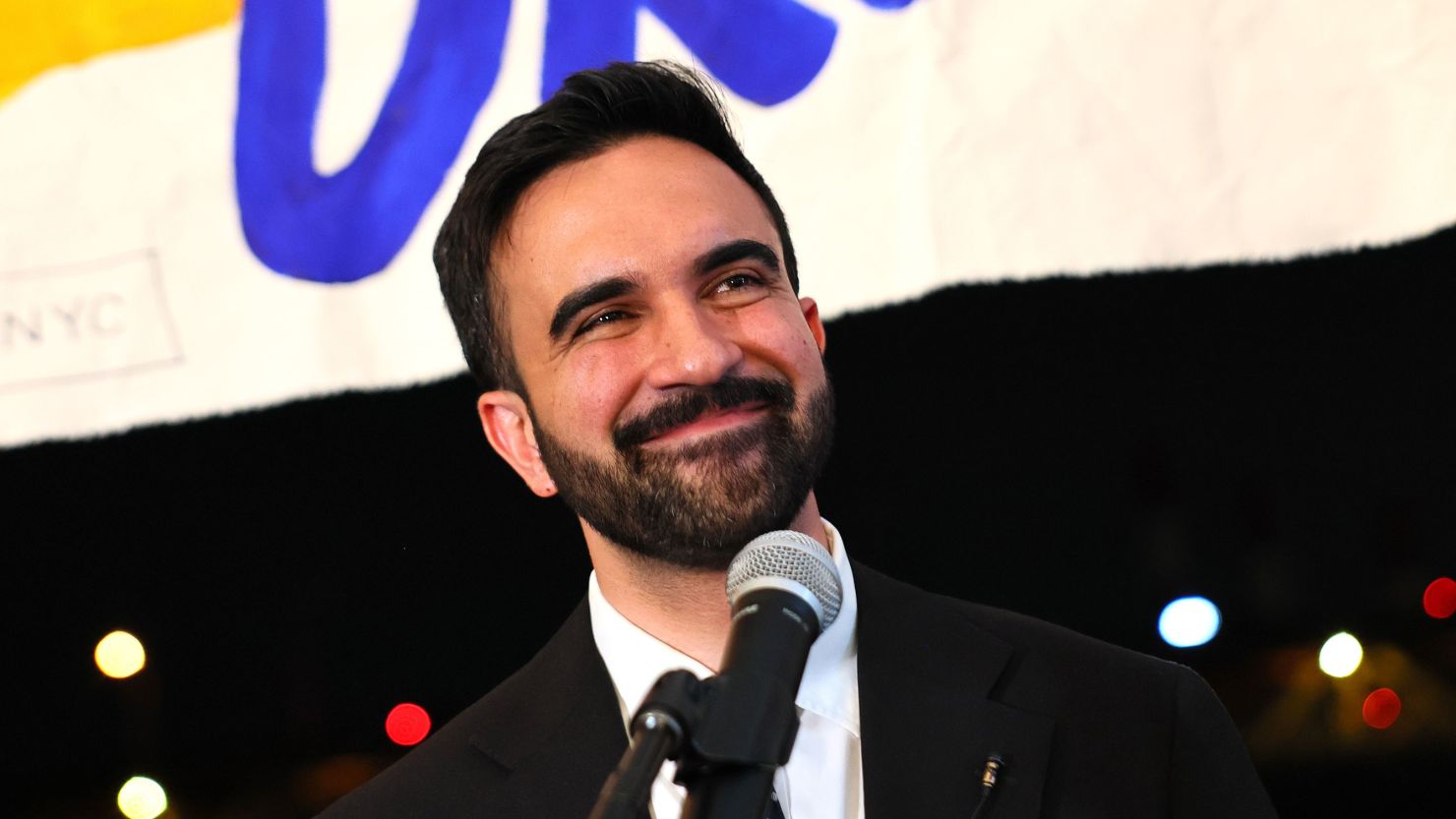
Zohran Mamdani, a 34-year-old Muslim man, son of immigrants, won one of the most influential political positions in America when he was elected as the 111th mayor of New York City.
His victory speech was electric. But it wasn’t just the content that struck me. It was the craft.
“New York will remain a city of immigrants: a city built by immigrants, powered by immigrants and, as of tonight, led by an immigrant.”
“Fingers bruised from lifting boxes on the warehouse floor, palms calloused from delivery bike handlebars, knuckles scarred with kitchen burns: these are not hands that have been allowed to hold power. And yet … you have dared to reach for something greater.”
“I speak of Yemeni bodega owners and Mexican abuelas, Senegalese taxi drivers and Uzbek nurses, Trinidadian line cooks and Ethiopian aunties. Yes, aunties. To every New Yorker …, know this: this city is your city, and this democracy is yours too.”
“This will be an age where New Yorkers expect from their leaders a bold vision of what we will achieve, rather than a list of excuses for what we are too timid to attempt.”
“A great New Yorker once said that while you campaign in poetry, you govern in prose… If that must be true, let the prose we write still rhyme.”
“To Donald Trump, I have four words: Turn. The. Volume. Up.”
He didn’t just win with policy. He won with language.
His rhetoric was chicken soup for this English teacher’s soul.
You can watch the whole thing here to see for yourself:
The Education Behind the Eloquence
And here’s where it gets interesting:
Where did he go to college?
Bowdoin. A small liberal arts school in Brunswick, Maine.
(And coincidentally, the town where my father, Allah yarhamuhu, retired, and where my brother still lives.)
And what did he major in?
Africana Studies.
Not engineering. Not finance. Not pre-med.
Instead, the study of liberation movements, philosophy, identity, and rhetoric.
This is the kind of major that would make many Muslim parents lose sleep at night thinking, “What job will he even get with that?”
And yet, he didn’t just get a job. He got a city.
Not because he optimized for credentials, but because he mastered how to think, how to write, how to speak.
The Case for the Liberal Arts
For many Muslim parents, the very phrase “liberal arts” inspires a quiet sense of dread, as if it were shortform for financial instability.
“You want to study history?” they think to themselves. “Philosophy? Literature? What are you going to do with that?”
There’s a deep irony here.
Because the very institutions that so many of the families I work with through Five Before College dream of sending their children to, such as Harvard, Yale, Princeton, Brown, and Columbia, are, in fact, liberal arts colleges.
The entire Ivy League undergraduate model is built around the same intellectual breadth and moral formation that Muslim parents so often dismiss as “impractical.”
And yet, these are the places that have shaped some of the most influential leaders, writers, and changemakers in modern history.
The skills most often dismissed as “useless” are often the ones most required to lead.
And whether you agree with Mamdani’s politics or not, what’s undeniable is this: he developed the ability to persuade clearly, powerfully, publicly.
And that might just be the most valuable skill of all.
Because it moves people—and people move the world.
What Is College Really For?
This raises a deeper question we all need to ask as Muslim parents and educators:
What is college for?
Is it only to launch a career?
Or is it also to shape a soul?
For most of us, the answer is understandably pragmatic: we want our children to have stability, to be employable, to thrive.
That’s why we gravitate toward medicine, law, engineering.
That’s why we focus relentlessly on GPA and SAT scores.
And there’s nothing wrong with that.
But what about the thinkers?
What about the ones who lead?
Who speak truth in clear prose, who write arguments that hold, who carry ideas with presence and adab?
If we don’t train those skills early, drawing on the grammar, logic, and rhetoric of our own tradition, then we shouldn’t be surprised when our children grow up compliant but confused. Busy, but empty.
If this essay resonated with you, you’ll love the 7-Day College Roadmap. It’s a free email course where I’ve distilled 20 years of experience guiding Muslim students into one practical week, showing parents how their children can stand out without burning out on the path to elite colleges.